
How to Spot Genuine Leather: Simple Tips So You Never Get It Wrong
Genuine leather or faux leather: the difference isn't always easy to spot, especially when shopping online. Many shoppers feel unsure when it comes to choosing, between vague labelling and materials that look almost identical at first glance. Between checking the material, the finish, and a few simple physical cues, it doesn't take much to shop with real confidence. Here are our simple tips to spot genuine leather in a matter of seconds, so you never get it wrong again.
Why it matters to know how to spot genuine leather
Genuine leather vs synthetic leather, what's the difference
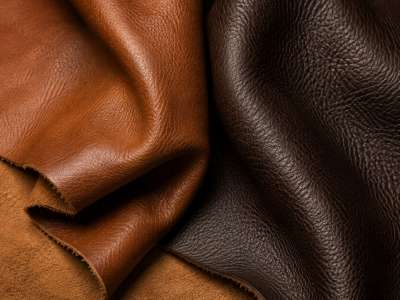
Genuine leather is a natural material made from tanned animal hide. Every piece is unique: it carries slight irregularities, a grain that varies from one area to another, sometimes small natural markings. It's precisely this irregularity that gives away its authenticity, whereas synthetic leather aims for the opposite, a perfectly uniform finish.
Synthetic leather, or faux leather, is made from plastic, usually PVC or polyurethane, applied to a textile base. It mimics the look of leather but has neither its fibrous structure nor its natural properties: it doesn't breathe, doesn't develop a patina, and ages very differently, cracking rather than improving with age.
In terms of durability, the gap is significant. Quality leather, properly cared for, can last for years and stay relevant well beyond passing trends. Faux leather, on the other hand, has a shorter lifespan: it cracks, peels in places, and generally can't be repaired or resoled the way genuine leather can.
It's also a matter of everyday comfort. Leather, a natural and porous material, gradually moulds to the shape of the foot and lets skin breathe. Synthetic leather, stiffer and non-porous, doesn't conform to the foot as well and can lead to a feeling of heat or discomfort over time.
This difference also shows up in how each material handles repeated wear. Genuine leather stretches almost imperceptibly around pressure points, gradually creating a near-custom fit. Faux leather, being far less elastic, tends to keep its original shape rigidly, which is often what causes rubbing and blisters after a few wears, especially around the heel and the sides of the foot.
Common pitfalls to avoid, in-store and online
In-store, the first mistake is relying on looks alone. To the eye, a well-made faux leather can now fool most shoppers: the grain is printed with great precision, and the finish is sometimes even glossier than a natural leather's. It's essential to always back up what you see with touch and smell, never judging by sight alone.
Online, the pitfall is different: you can neither touch nor smell the material before buying. That means paying close attention to the product page itself. Terms like "genuine leather," "full-grain leather" or "100% leather" are regulated and must reflect the actual product, unlike vaguer wording such as "leather-look" or "leather-effect," which almost always signals synthetic material.
Another common trap is price. Quality genuine leather costs more to produce than faux leather, due to tanning, hide selection and the skilled labour required to work it. An unusually low price on an item advertised as leather should raise a flag, especially on marketplaces that aren't strict about accurate product descriptions.
Finally, be wary of materials that look "too perfect": leather that's completely smooth, with no variation in tone or grain from one shoe to the next, often hides a synthetic material. Genuine leather, by nature, is never exactly identical from one pair to the next.
It also helps to know the main terms used across the industry, so you're not misled by deliberately vague wording. "Full-grain leather" refers to the top, most prized layer of the hide, the one that keeps the animal's natural grain. "Split leather" or "corrected-grain leather" refers to a deeper layer, buffed and often coated to even out its appearance. Both terms still describe genuine leather, unlike phrases such as "bonded leather" or "reconstituted leather," which actually refer to a mix of leather scraps and synthetic binders, far removed from full-grain leather in terms of durability.

Our simple tips for recognizing authentic leather
Smell, the first giveaway that never lies
It's often the simplest reflex, and yet the most reliable: smell the shoe. Genuine leather gives off a natural, slightly animal, tannic scent, unmistakable once you're used to it. It's a smell that lingers over time, even after months of wear.
Faux leather, on the other hand, usually smells of plastic or chemical glue, a sharper, more artificial scent that fades quickly, but which immediately gives away the material once you take the time to compare the two side by side.
This test is especially useful in-store, where you can compare several pairs in seconds. Online, you obviously can't smell the product before it arrives, but keeping this reflex the moment you open the parcel lets you quickly check whether your purchase matches the product description.
One tip: avoid running this test right after handling a scented product, cream or perfume, as your sense of smell will be temporarily less sensitive to leather's subtler notes. Also take the time to smell the inner lining, not just the outer surface, since some faux leather shoes use genuine leather for the lining for comfort, which can throw off the test if you only check the outsole.
Touch and grain, a texture that speaks for itself
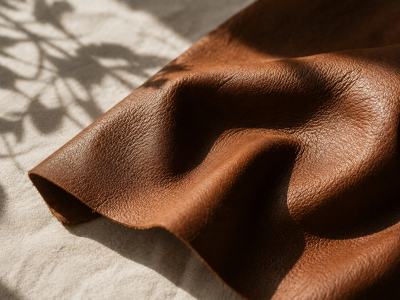
To the touch, genuine leather feels warm, slightly supple, and its surface is never perfectly smooth: you can feel small natural irregularities, the famous grain that varies across the hide. Synthetic leather, by contrast, feels cooler and more uniform, almost plasticky to the touch.
Another clue hides on the underside of the material, when you can access it: genuine leather shows an irregular fibrous structure on its inner face, while faux leather reveals the weave of its textile base, usually a more regular, industrial-looking pattern.
Finally, how the material reacts to the warmth of your hand is a good indicator: held for a few seconds, genuine leather slightly warms up and feels almost lukewarm to a prolonged touch. Synthetic leather stays cold for longer, since it doesn't respond to body heat the same way.
You can also watch how the material reacts to light finger pressure: on genuine leather, a faint indent forms and then gradually fades, proof of the fibres' natural elasticity. On synthetic leather, the surface either bounces back instantly, or keeps a sharp mark that doesn't disappear, a sign of a less responsive plastic coating.
The fold and flexibility test
The last test, very easy to run, is to gently fold the material between your fingers. Genuine leather folds into small, fine, natural creases that disappear once you release the pressure. It's this controlled flexibility that lets leather move with the foot without ever cracking.
Faux leather, on the other hand, behaves differently: it forms sharper, more angular creases, sometimes with a slight whitening along the fold line, a sign that the plastic coating is starting to crack. Over time, these repeated fold points end up cracking for good.
This test is especially useful for assessing the quality of full-grain leather, the most prized layer of the hide, known for its flexibility and long-term resistance. The faster a material springs back into shape after folding, the better its quality generally is.

Our genuine leather styles to shop with confidence
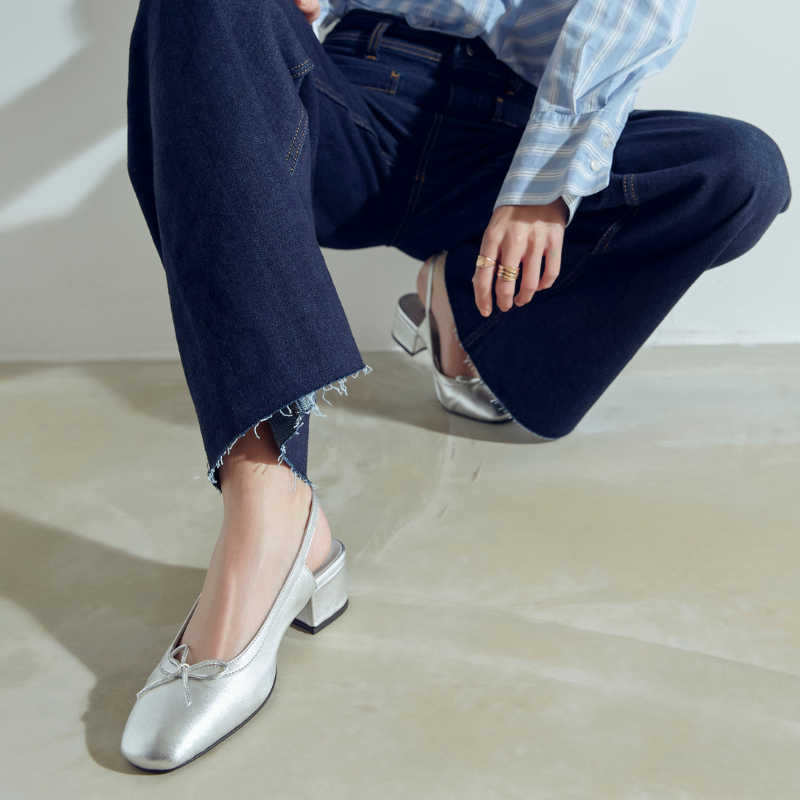
The Carmen ballerina, soft leather for everyday wear
The Carmen ballerina is a perfect example of what quality leather can bring to everyday wear. Its soft material moulds to the foot from the very first wears, with no uncomfortable break-in period, unlike what's often seen with stiffer faux leather.
Over the months, the leather on Carmen develops a subtle patina, unique to each pair depending on how it's worn and cared for. That's a genuine leather signature: the shoe evolves with you, rather than wearing down evenly the way a synthetic material would. It's also what makes every pair of Carmen slightly different from one customer to the next, a detail that never lies about the authenticity of the material.
It's also a great style for putting the tips above into practice: to the touch, you can immediately feel the leather's natural grain, and the material's flexibility makes it easy to check the build quality before buying in-store.
The Hema loafer, leather that holds its shape
The Hema loafer uses a more structured leather, one that keeps a clean line while staying comfortable. It's a great example of genuine leather engineered to hold its shape, unlike faux leather, which tends to deform more quickly around the heel and instep.
This structure never comes at the expense of comfort: the leather stays flexible enough to move with the foot, while offering the support a shoe needs to be worn all day, whether at the office or on the go. It's also a good example of the touch test mentioned earlier: the firmness of the leather across the vamp deliberately contrasts with the softer flex at the sole and bending points.
The Hydra derby, leather built to last
The Hydra derby embodies the durability that genuine leather promises. Designed as an investment piece, this style is built to last several seasons without losing quality, provided it's well cared for.
Unlike a faux leather shoe, which typically cracks and peels within a year or two of regular wear, Hydra's leather can be conditioned, polished, and even resoled if needed. This ability to be repaired and to improve with time is exactly what separates a fleeting purchase from a lasting wardrobe piece.
On this style, the leather grain is particularly visible, making it a great example for practising the natural irregularities described earlier: no two pairs of Hydra are ever perfectly identical, and that's exactly what guarantees their authenticity.
It's also a style that responds particularly well to regular care with polish or a nourishing cream, a simple habit that extends the leather's lifespan even further and brings out the natural depth of its grain over time. Taking a few minutes every couple of weeks to condition the leather is often all it takes to keep a pair looking sharp for years, well beyond what faux leather can offer.

Genuine leather, a safer and more durable choice
Smell, touch, grain, the fold test: these few reflexes are all it takes to spot genuine leather in a matter of seconds, whether in-store or the moment a parcel arrives. They're simple habits, but they make all the difference between a purchase that lasts and a pair that falls apart within a few months.
Choosing genuine leather also means choosing a material that ages well, develops a patina, can be repaired, and is sometimes even passed down, unlike faux leather, designed for a much shorter lifespan. It's a choice that's both aesthetic, cost-effective in the long run, and more respectful of genuine craftsmanship.
It's also worth remembering that no single test is entirely foolproof on its own. The smell, touch and fold test each catch different things, which is why combining all three gives the most reliable read on a material, especially with today's increasingly convincing faux leather finishes.
Next time you're torn over a pair of shoes, keep these reflexes in mind: smell, touch, gently fold the material. Within seconds, you'll know whether you're holding genuine leather, or an imitation that won't go the distance. These habits quickly become second nature, and will serve you for every future leather shoe purchase, whether you're shopping in-store or online.
Discover our full collection of women's genuine leather shoes and choose a material built to last.
Share this content
